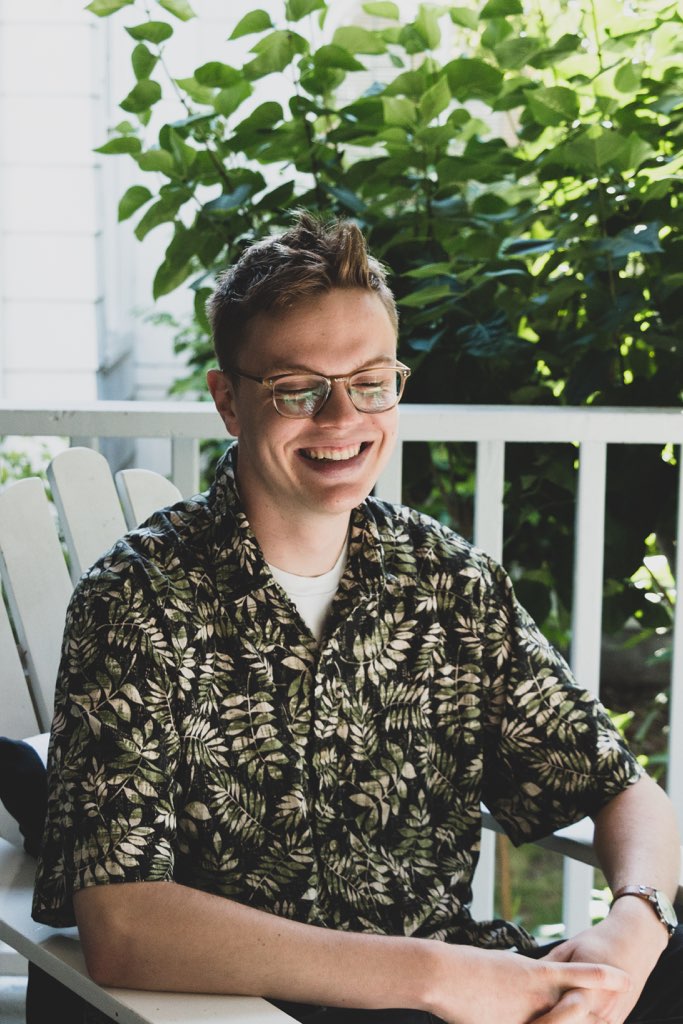
Oliver Lang

– doctoral candidate
University of Wisconsin-Madison

Research at the intersection of comparative politics, political communication, and political economy.

Dissertation

Propaganda and the logic of competition in autocratic media markets

I study media markets and the supply of propaganda in authoritarian regimes. My dissertation project examines the origins and consequences of competition in the market for television news.

The central argument is that media market competition changes the audience for, as well the constraints on, regime propaganda: citizens skeptical of pro-regime messaging can seek out alternative, often apolitical, media; and absent the constraints of a skeptical audience, regimes can broadcast more biased propaganda yet will reach a smaller audience. This trade-off has implications both for the efficacy of propaganda and information control under autocracy, as well as the stability of authoritarian regimes.

I evaluate this argument using original data on 25 years of outlet competition in the market for television news across sixty-four autocracies, a content analysis of scraped newscasts from government channels, and cross-national survey data on news consumption.

Research

Tribal voting in new democracies: evidence from 6 million Tunisian voter records

with Alexandra Blackman, Steven Brooke, and Gabriel Koehler-Derrick

Open PDF

This paper examines the role of tribal affiliations in shaping electoral behavior in post-revolutionary Tunisia. Using original data from 6 million voter records, we find that tribal identity remains a significant predictor of vote choice, even controlling for partisan preferences and policy attitudes.

Tribal voting in new democracies: evidence from 6 million Tunisian voter records

accepted @ Journal of Politics

How Increasing Refugee Visibility on TV News Causes Viewers to Support Refugees More, but Like Them Less

with Adeline Lo

Open PDF

We examine how increased media coverage of refugees affects public opinion. Using a natural experiment in television news coverage, we find a paradoxical effect: while visibility increases support for refugee-friendly policies, it simultaneously decreases warmth toward refugees as individuals.

How Increasing Refugee Visibility on TV News Causes Viewers to Support Refugees More, but Like Them Less

Who complies with censorship: evidence from Brazilian censorship directives

with Tatiana de la Cruz, and Ned Littlefield

Open PDF

This paper investigates compliance with censorship directives during Brazil's military dictatorship. Using newly digitized archives of censorship orders and newspaper content, we examine which outlets complied with state censorship demands and why.

The strategic origins of the Streisand Effect: evidence from censored newspaper in the GDR

This paper examines the strategic dynamics behind the Streisand Effect — when censorship attempts inadvertently increase attention to the censored content. Using archival data from East German newspapers, we analyze how state censors navigated this dilemma.

Teaching

@ University of Berlin

Fuck shit up!!! American Style

last taught: Fall 2025

In this course, we'll explore the wild world of American culture and politics, with a focus on how to stir up trouble and challenge the status quo. From protesting corporate greed to questioning government policies, we'll learn how to make our voices heard and maybe even start a revolution or two. Get ready to unleash your inner rabble-rouser and discover the art of causing a ruckus, all while maintaining a sense of humor (and hopefully avoiding jail time).

@ University of Wisconsin-Madison

Satellites and why they are cool!

last taught: Fall 2025

Ever wondered why those shiny objects in the sky are so darn captivating? Well, buckle up, buttercup, because we're diving headfirst into the wacky world of satellites! From their humble beginnings as glorified Sputniks to their current role as the backbone of modern communication, we'll uncover the secrets behind these high-flying gizmos. Get ready for mind-blowing facts, quirky anecdotes, and maybe even a conspiracy theory or two. By the end of this course, you'll be able to impress your friends with your newfound satellite knowledge and finally understand why they're not just pretty decorations in the night sky.

About

Oliver Lang

I am a doctoral candidate in the Department of Political Science at the University of Wisconsin-Madison, specializing in comparative politics, political communication, and political economy.

My research examines media markets under authoritarian rule — specifically, how competition shapes the distribution of propaganda and citizens' access to information. I investigate the fundamental tension between reaching audiences and controlling information in autocratic contexts.

Before coming to Madison, I completed my undergraduate studies in political science and economics at [Your Previous Institution]. My work has been supported by [relevant fellowships or grants].